


Fatbike stolen: what now?
First check whether the municipality removed your fatbike: look it up via verlorenofgevonden.nl. If it is not in a bicycle depot, report the theft to the police, online with DigiD or after making an appointment by calling 0900-8844. Provide the frame number; it is usually listed on the proof of ownership. Only after you file a report will your bike be added to the bicycle theft register.
The steps below are listed in order: what you need when filing a report, how to check the register and what the police do with a recovered bike. The information comes from the police, the Dutch government and the RDW. At the bottom, you will find fatbikes with the features specified by the manufacturer for each model.
First check the bicycle depot
A missing bike does not necessarily mean it was stolen. The municipality removes bikes that are dangerous or have been parked for too long, or that are somewhere they are not allowed to be, the police says. Those bikes are taken to the bicycle depot. On verlorenofgevonden.nl, you can check all bicycle depots, and your municipality's website can help too.
Also search the surrounding area. Thieves sometimes leave a bike a little farther away and wait to see whether it is a police bait bike, according to the Fietsersbond.
Report the theft to the police
If your fatbike is not in a depot, file a report. Only then will it be added to the bicycle theft register, and according to the police, without a report there is no chance of getting your bike back through the police. Nevertheless, the Dutch government says that only about a quarter of thefts are reported.
You can report the theft online with your DigiD. If you would rather report it in person, call 0900-8844 to make an appointment. Reporting online is not always possible: in cases involving violence, theft from your home or if it happened more than a year ago, the guide on politie.nl will direct you elsewhere. The police advises doing this as soon as possible.
What do you need to file a report?
Most importantly, the frame number or chip number. This is usually listed on the proof of ownership you receive from the bicycle retailer (Dutch government). The police can only return a recovered bike to you with a frame number or chip number. The location of the number on the frame varies by brand: sometimes it is stamped into the frame, and sometimes it is on a sticker (Fietsersbond).
Also provide as many details as possible: the brand, type and color, as well as distinctive features such as scratches or the type of lock. The police advises bringing your purchase receipt, insurance documents and proof of identity.
Check the RDW bicycle theft register
If you file a report with the frame number or chip number, your fatbike will automatically be added to the bicycle theft register. The police have a maximum of 10 days to check the report; only after that will the bike appear in the register. At the RDW, search using the brand and frame number to see whether your report has been processed. The register only contains reports filed after January 1, 2008.
Anyone can consult the register, especially bicycle buyers and sellers and bicycle depot employees (Dutch government). If your bike appears in it, it is identifiable as stolen.
What does the police do with a recovered bike?
The police use the register to find the owner. If the bike is still in good condition, it is returned to the owner; by arrangement, the police can also have it delivered to you. According to the Dutch government, recovered bikes in poor condition are usually destroyed.
If your insurer has already compensated you for the bike, the insurer decides what happens to it. It usually then goes to AFAC, the general bicycle processing center. Do not count on seeing it again: according to the RDW, 7 percent of reports result in the bike being returned.
Do you see your fatbike somewhere?
Call the police; they can assist you. Make sure you can prove that the bike is yours, because the new rider may have bought it in good faith. If you see someone stealing a bike, call 112, advises the Fietsersbond.
Are you insured?
Then check whether you are insured. If you have bicycle insurance, report the theft to your insurer as soon as possible. Your bike may sometimes be covered by your home contents insurance, but this is not always the case and conditions often apply, such as having locked your bike (Verbond van Verzekeraars). Keep proof of the lock and the keys, as insurers often ask for these. The police also says that the frame number is often mandatory for insurance. What you are reimbursed depends on your policy.
Which fatbike suits you?
Compare the models below. Check each product page for the latest details.
ENGWE E26: kenmerken om op te schrijven
ENGWE noemt banden van 26 x 4,0 inch, hydraulische schijfremmen van 180 mm, 7 versnellingen van Shimano en een naafmotor met 70 Nm. Heb je de fiets verzekerd, dan heb je meestal ook kenmerken doorgegeven. Neem die mee naar de aangifte, raadt de politie aan.

ENGWE E26, High Step, Black
Herkenbaar aan 26 x 4,0 inch en schijven van 180 mm.
S20 Pro: kenmerken voor je aangifte
Volgens fabrikant QMWHEEL heeft de S20 Pro hydraulische schijfremmen, achtervering en banden van 20 x 4,0 inch. Schrijf zulke kenmerken op, samen met merk, type en kleur. Heb je geen framenummer, dan helpen ze de politie om je fiets te herkennen.
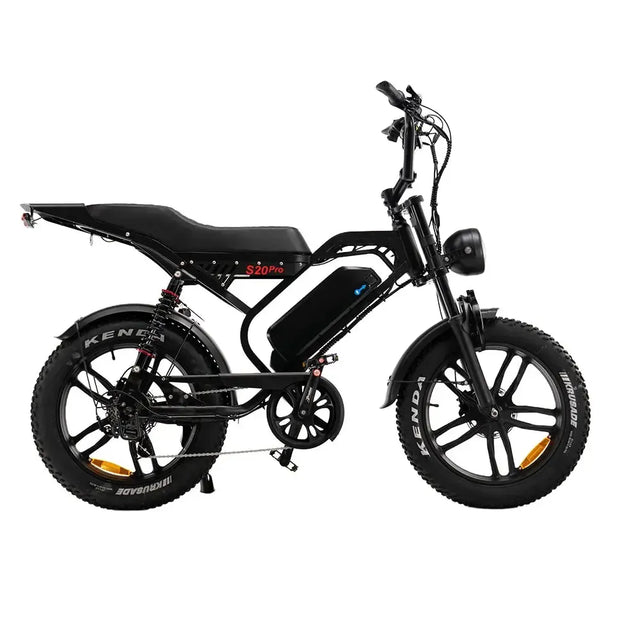

V20 Pro, Skinny Bike, Black
OUXI GT-20 Pro: herkenbare onderdelen
OUXI noemt hydraulische schijfremmen voor en achter en banden van 20 x 4,0 inch. Schrijf ook je framenummer op en bewaar het op een goede plek, zoals de politie adviseert. Alleen met een framenummer of chipnummer kan de politie een teruggevonden fiets aan je teruggeven.
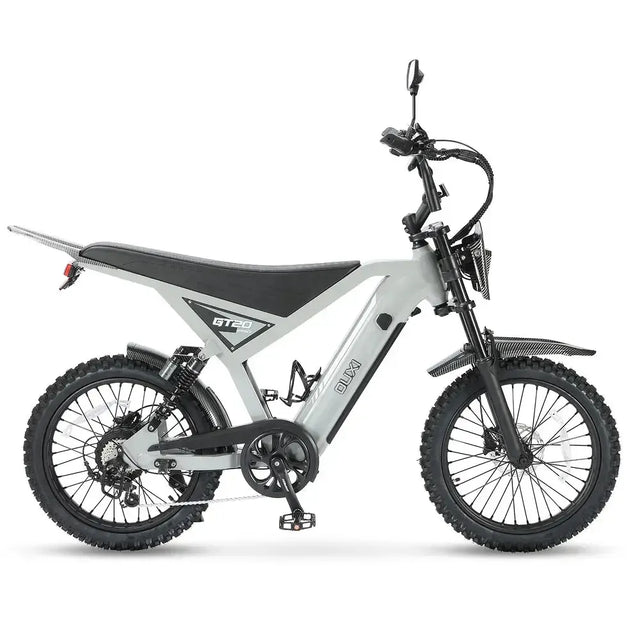
OUXI GT-20: wat je noteert voor een aangifte
OUXI noemt hydraulische Tektro-schijfremmen met 4 zuigers, vering voor en achter, 7 versnellingen en banden van 20 x 4,0 inch. Vul een fietsregistratiekaart in met zulke kenmerken; die kun je volgens de politie meenemen als je aangifte doet.
