


How heavy is a fatbike?
Most popular fatbikes weigh around 35 kilos, according to a 2024 report by research agency DTV for the Ministry of Infrastructure and Water Management. According to that report, regular e-bikes usually weigh 25 to 30 kilos. There are also lighter fatbikes: in 2025, research agency Goudappel found several models weighing around 25 kilos, with the lightest weighing about 24 kilos according to the sellers.
Below, you can read why these figures vary, what that weight means when lifting the bike and when using a bike rack, and how much weight is allowed on a fatbike. At the bottom, you will find fatbikes with the weight specified by the manufacturer for each model.
Is a fatbike heavier than a regular e-bike?
On average, yes, DTV writes, but weight is not a characteristic by which you can identify a fatbike. Folding fatbikes exist that are lighter, while cargo bikes and cargobikes sometimes weigh more than 50 kilos. Goudappel reaches the same conclusion: the weight of fatbikes is not a distinguishing characteristic.
According to Goudappel, the weight difference between electric bikes is generally around 10 kilos, excluding cargo bikes and tricycles. And the rider usually weighs more than the bike itself.
Why do the stated weights vary?
Measured fatbike weights are scarce. At the ANWB, the Consumers' Association, ADAC and Stiftung Warentest, we found no test in which fatbikes were weighed. The ANWB listed six fatbikes weighing between 29 and 35 kilos, but explicitly states that this is not an e-bike test. These are therefore manufacturer specifications, not measurements by the ANWB. The lightest fatbikes from Goudappel's study are also weights provided by sellers.
Therefore, pay attention to what was weighed. Goudappel used the bike ready for use: including the battery, without accessories. A weight excluding the battery cannot be compared with this.
What difference does such a weight make?
When lifting it, for example onto a bike rack. An e-bike quickly weighs 25 kilos or more, the ANWB writes, so it is best to lift it with two people. A fatbike weighing around 35 kilos is even heavier.
Weight also matters while riding. According to DTV, heavier fatbikes are more difficult to handle, especially for young, potentially inexperienced and lighter riders. Goudappel writes that low weight helps with maneuverability and braking, but also makes a bike more sensitive to wind and poor road surfaces. A low center of gravity provides stability, and the position of the battery makes a significant difference as well.
A fatbike on a bike rack
Calculate it first. The bikes plus rack must not exceed the maximum tow-ball load of your car, which is between 50 and 75 kilos for most passenger cars, the ANWB writes. Take the ANWB's example: a 20-kilo rack on a tow bar with a tow-ball load of 70 kilos leaves 50 kilos for the bikes. Two fatbikes weighing around 35 kilos do not fit within that limit.
Remove the batteries and place them in the trunk, and also remove bags and loose locks from the bike, the ANWB advises. Also check how much the rack itself can carry; this is stated in the manual or on a sticker on the rack.
How much weight is allowed on a fatbike?
It varies by model. For some of the fatbikes below, the manufacturer's stated load capacity is listed. Pay attention to exactly what is meant: according to the ANWB, the maximum permitted total weight includes everything, so you, your luggage and the bike itself. If the bike weighs around 35 kilos, a significant part of that limit has already been used. If you exceed it, your braking distance will increase, and prolonged overloading can cause parts to break, the ANWB warns.
Which fatbike suits you?
Compare the models below. Check each product page for the latest details.
ENGWE E26: 34,5 kilo op 26 x 4,0 inch
ENGWE geeft voor de E26 met hoge instap 34,5 kilo op. Hij rijdt op banden van 26 x 4,0 inch en heeft een accu van 768 wattuur (48 volt, 16 ampère-uur), een naafmotor van 250 watt met 70 Nm, hydraulische schijfremmen van 180 millimeter en 7 Shimano-versnellingen.

S20 Pro: draaggewicht tot 150 kilo
Volgens fabrikant QMWHEEL mag de S20 Pro maximaal 150 kilo dragen. Hij rijdt op banden van 20 x 4,0 inch, heeft hydraulische schijfremmen en achtervering.
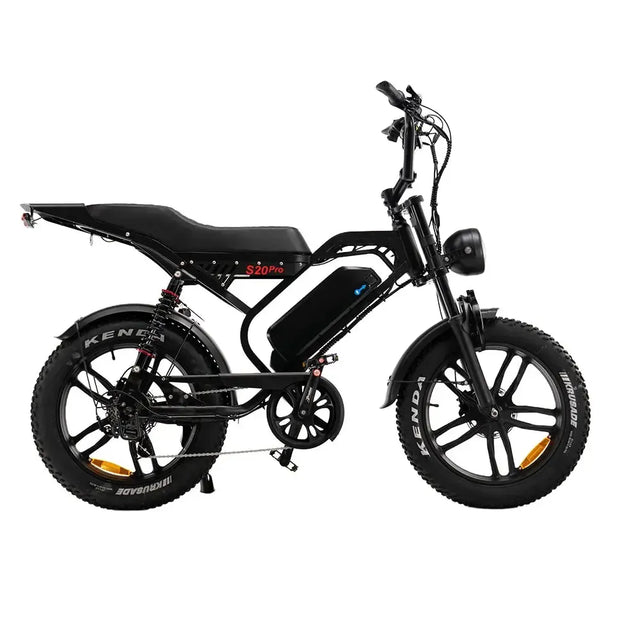

V20 Pro, Skinny Bike, Black
OUXI GT-20 Pro: hydraulische remmen op dikke banden
Volgens OUXI remt de GT-20 Pro met hydraulische schijfremmen op het voor- en het achterwiel. Hij rijdt op banden van 20 x 4,0 inch.
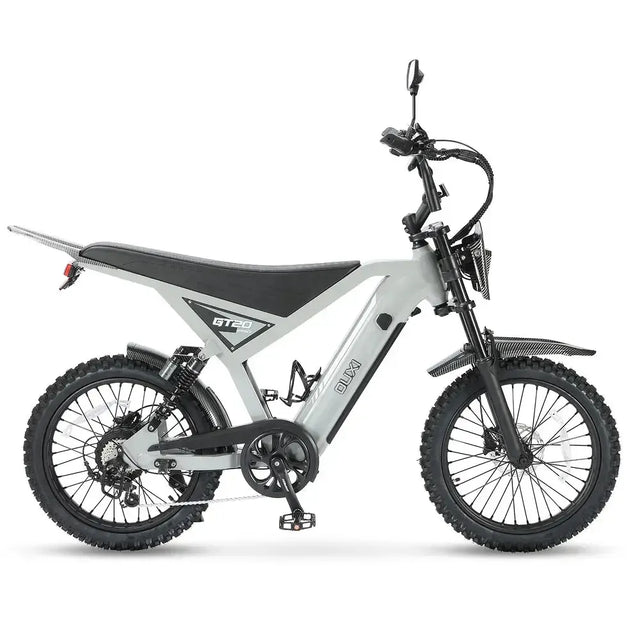
OUXI GT-20: tot 150 kilo, met 7 versnellingen
OUXI noemt voor de GT-20 een maximaal draaggewicht van 150 kilo. Hij heeft vering voor en achter, hydraulische Tektro-schijfremmen met 4 zuigers, banden van 20 x 4,0 inch en 7 versnellingen.
