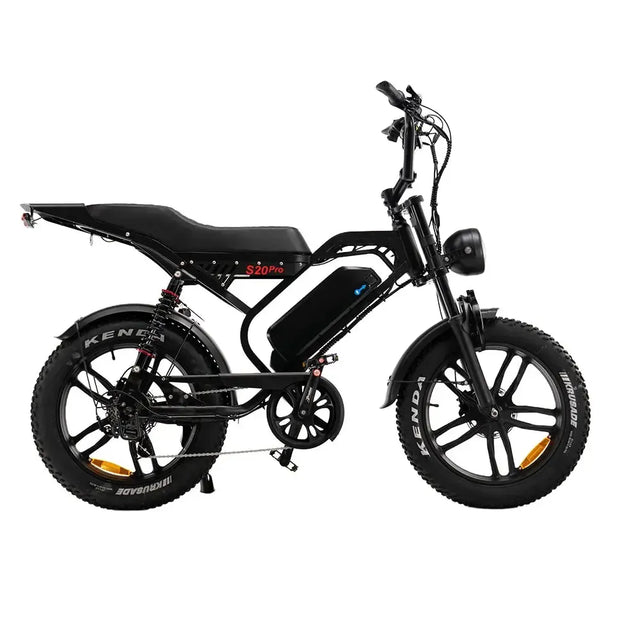
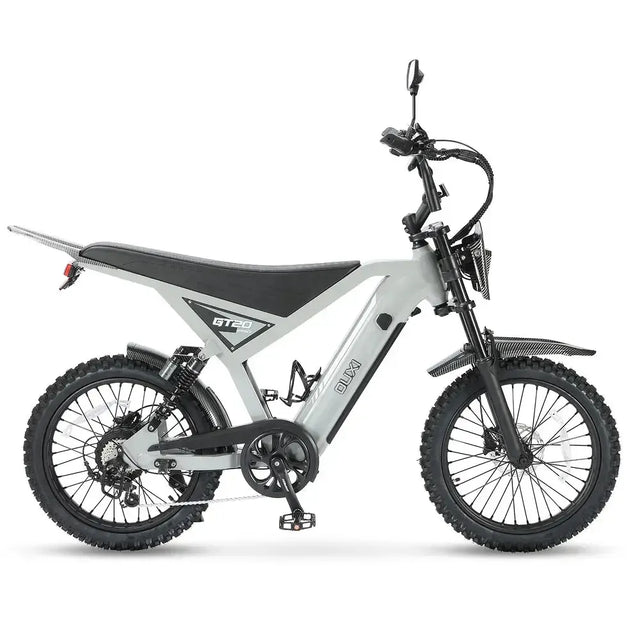
Is a fatbike dangerous?
According to the government, there is no evidence that a fatbike is more dangerous than another e-bike. However, more and more fatbike riders were turning up at emergency departments; in 2024, more than half of them were aged 12 to 17. Wear a helmet, choose a bike that has not been modified for higher speeds and one that is not too heavy for you.
Below are the figures and what they do and do not say, the difference from a regular e-bike and what you can do yourself. At the bottom, there are fatbikes to compare.
How many accidents happen involving fatbikes?
There is no precise nationwide figure: according to VeiligheidNL, too few fatbike accidents have been recorded for a reliable national estimate. You will come across three figures, each measured differently.
-
301 visits to emergency departments following a fatbike accident were recorded by VeiligheidNL in 2024 in the Injury Information System (LIS), at the 13 emergency departments that participate. In 2020, the figure was zero. Of those victims, 55 percent were aged 12 to 17.
-
2,200 is the national estimate VeiligheidNL derived from this, but VeiligheidNL itself considers it insufficiently reliable: the margin of uncertainty ranges from 1,500 to 3,100.
-
Approximately 5,000 per year is a rough estimate based on a measurement week. During the first week of October 2024, all emergency departments counted bicycle accidents; 96 victims were riding a fatbike. VeiligheidNL extrapolated this to a year, assuming an average week.
Fatal accidents are counted by Statistics Netherlands (CBS): in 2025, 281 cyclists died in traffic, including at least 114 on an e-bike, of whom 8 were on a fatbike. CBS calls the number of e-bike fatalities a lower bound: it relies on the police report or death certificate, which often does not distinguish between a regular bicycle and an e-bike.
Is a fatbike more dangerous than a regular e-bike?
According to the government, there is no evidence of this.
More accidents do not automatically mean that a fatbike is riskier: many more fatbikes are also being sold. Their share of new bicycle sales rose from one percent in 2020 to 13 percent in 2024. Data on the number of miles ridden on a fatbike is lacking, so according to the government it is unclear how much of the increase is due to this additional use.
One figure points in the other direction. During the measurement week, 22 percent of fatbike riders who went to an emergency department were subsequently admitted to hospital, compared with 16 percent of riders of other e-bikes. VeiligheidNL considers this an indication of more serious injuries on average, but it concerns just one week of counting.
What is the problem with fatbikes?
According to the government, the rise of fatbikes is accompanied by increasing nuisance, unsafe traffic situations and a worrying increase in the number of accidents among young riders. Among young people aged 12 to 17, the number of brain injuries after an accident involving an electric bicycle, including fatbikes, increased more than sixfold between 2020 and 2024; among all electric bicycle riders combined, the increase was 86 percent. Almost no one wore a helmet: during the measurement week, just three percent of all fatbike riders at emergency departments were wearing one.
In June 2024, VeiligheidNL advocated banning fatbikes for under-16s and called on parents not to buy a fatbike for their child. There is currently no minimum age. In April 2026, the government announced one for fatbikes, but without specifying an age or date yet.
What are the disadvantages of a fatbike?
Two disadvantages affect your safety. The first is weight: most popular fatbikes weigh around 35 kilos, while most e-bikes weigh between 25 and 30 kilos, according to a report by research firm DTV for the ministry. According to DTV, heavier fatbikes are more difficult to handle, especially for young, potentially inexperienced and lighter riders, although more research is needed.
The second is the motor. According to the Consumers' Association, most fatbikes have a motor with a rotation sensor: you hardly need to apply any force and can reach the maximum speed with minimal effort. According to the Cyclists' Union, such a sensor can provide full assistance when manoeuvring if you rotate the pedals without applying force, and the assistance may continue briefly after you stop pedalling.
According to DTV, wide tyres are not necessarily less safe: the parties consulted by DTV consider wider tyres safer because they provide a more stable ride. No scientific research on this is known.
Modified for higher speeds or fitted with a throttle: then you are not insured
A fatbike is legally an electric bicycle if the pedal assistance stops at 25 kilometres per hour and the motor has a rated power of no more than 250 watts. If the bike can travel faster than 6 kilometres per hour using a throttle without pedalling, or faster than 25 while pedalling, it must be approved as a moped, low-speed moped or speed pedelec. Otherwise, it may not be used on public roads.
If you ride such a bike anyway, according to the Dutch government you are not insured: you must pay for damage to the bike, your medical costs and sometimes damage to another person yourself. The police can issue a fine and, after multiple violations, seize and destroy the bike. According to VeiligheidNL, it is not known how many fatbike riders at emergency departments had been riding a modified bike.
How to ride a fatbike more safely
Wear a helmet. It is not mandatory at present, but according to the Dutch government, wearing a helmet reduces the risk of serious head injuries by approximately 60 percent. The government plans to introduce a helmet requirement in 2027 for riders under 18 on fatbikes and other e-bikes; this is still only a plan.
Stay below the maximum permitted total weight of the bike, rider and luggage; otherwise, according to the ANWB, your braking distance will be longer. Brake pads wear out faster on an e-bike: the ANWB advises checking them several times a year. Inflate your tyres within the range indicated on the sidewall.
Which fatbike suits you?
Compare the models below. Check each product page for the latest details.
ENGWE E26: hydraulische schijfremmen op 26 x 4,0 inch
ENGWE noemt voor de E26 hydraulische schijfremmen van 180 mm voor en achter, op banden van 26 x 4,0 inch. De naafmotor heeft volgens ENGWE 250 W en 70 Nm, en de maximale snelheid is 25 km/u. Met ongeveer 35 kilo is hij niet licht: oefen eerst rustig met keren en remmen.

ENGWE E26, High Step, Black
Hydraulische schijfremmen voor en achter, op 26 inch.