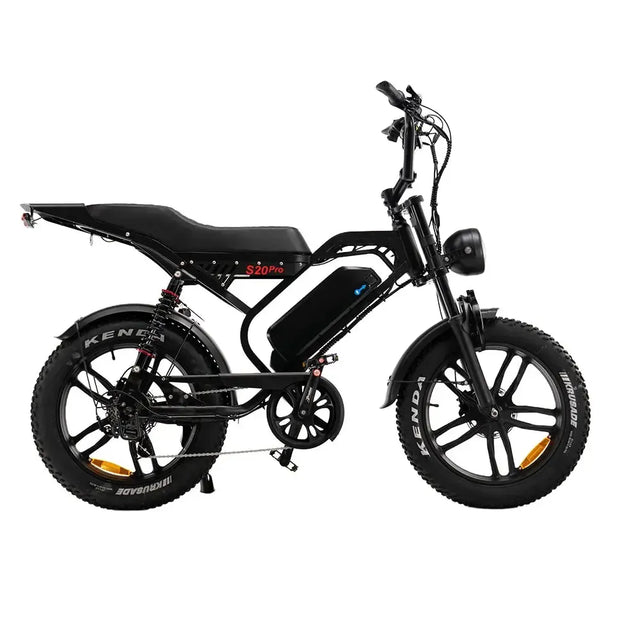
Where is the fatbike prohibited?
There is no nationwide Fatbikes ban. In the official municipal rules, as of early October 2026, we found two places where you may not ride a fatbike: the entire Vondelpark in Amsterdam, since May 11, 2026, and the pedestrian zone in Enschede city center during shop opening hours, since March 11, 2026. Beverwijk has only made a ban possible.
Below, you can read what applies in each location, which bikes are covered by the rules, and what municipalities may do in the future. The rules mainly focus on tire width. Models to compare are listed at the bottom; you can find the full range in our fatbikes.
Where does a fatbike ban currently apply?
Amsterdam: Vondelpark
Since May 11, 2026, you may not ride a fatbike anywhere in Vondelpark. The Vondelbrug, which runs above the park, is not included. You may dismount and walk your fatbike through the park, just as you may cycle around the park.
Under Amsterdam's rules, a fatbike is a pedal-assisted bicycle with tires wider than 7 centimeters. From age 12, you can receive a fine, and the fine is lower for 12- to 15-year-olds than for people aged 16 and over. Children under 12 do not receive a fine; in that case, the municipality talks to their parents or guardians.
As of early October 2026, the municipality only lists Vondelpark as a place where you may not ride a fatbike. It will first investigate the ban's effects and may then introduce it in other places in the city as well.
Enschede: the city center during shop opening hours
Since March 11, 2026, you may not ride a fatbike in the pedestrian zone in the city center on Monday, Tuesday, Wednesday, Friday, and Saturday from 10:00 a.m. to 6:00 p.m., on Thursday from 10:00 a.m. to 9:00 p.m., and on Sunday from noon to 5:00 p.m. You may ride there outside these times, and taking your fatbike along while walking remains permitted.
Enschede defines a fatbike as a two-wheeled pedal-assisted bicycle with tires wider than 7 centimeters and a wheel size of no more than 27 inches. By pedal assistance, the municipality means any bicycle with an electric auxiliary motor, including a fatbike that can do more than national rules permit. Anyone who violates the ban can receive a fine. You can apply for an exemption only if you need to ride a fatbike for medical reasons.
The municipal executive may also designate other areas, on days and at times it determines. The explanatory notes mention parks and the surroundings of shopping centers as examples.
Beverwijk: a ban is possible
Since June 5, 2026, Beverwijk's General Municipal By-law (APV) has stated that the mayor may designate areas, roads, or sections of roads where you may not ride a fatbike. There, a fatbike is defined as a two-wheeled pedal-assisted bicycle with tires wider than 7 centimeters. As of early October 2026, we had not found a decision in which the mayor designated such an area.
Which fatbikes are covered by a local ban?
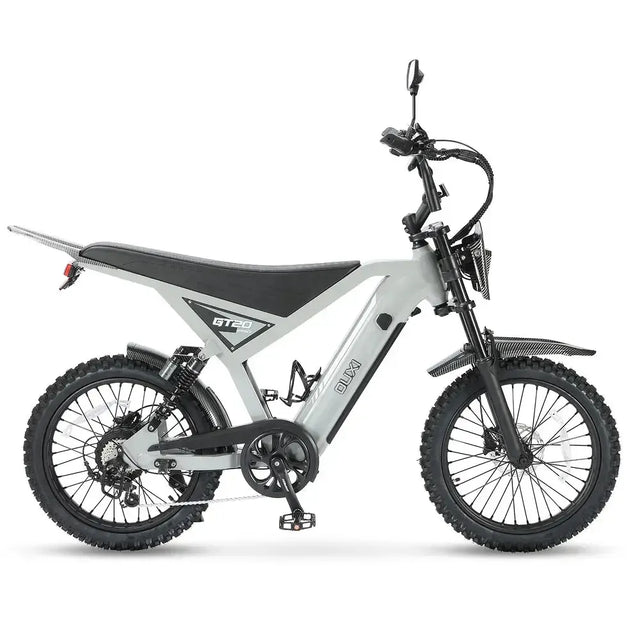
That depends on the tires, not the brand or the name of the bike. In all three municipalities, a pedal-assisted bicycle counts as a fatbike if its tires are wider than 7 centimeters. Enschede also adds a wheel size of no more than 27 inches, meaning that certain electric mountain bikes with wide tires are not covered, for example.
How wide is a fatbike tire? A tire described as 4 inches wide is 98 to 100 millimeters wide according to tire manufacturers Schwalbe and Kenda. In a tire's ETRTO size, the width is given first in millimeters: 100-559 means 100 millimeters wide. If you prefer narrower tires, take a look at the skinny bikes and check the tire width for each model.
Which fatbikes are banned everywhere?
Fatbikes that do not meet the rules for an electric bicycle. Nationally, the law makes no distinction: a fatbike is subject to the rules for e-bikes. If it has a throttle that lets you go faster than 6 km/h without pedaling, or if the motor also assists above 25 km/h, it must be approved as, for example, a moped. Without approval, it may not be used anywhere on public roads.
Where cycling is generally prohibited, that also applies to a fatbike, because an electric bicycle is subject to the same traffic rules as an ordinary bicycle. We have not investigated such general cycling bans for each municipality.
Can more municipalities introduce a fatbike ban?
They can already do so. Under article 2a of the 1994 Road Traffic Act, municipalities may set additional rules in their General Municipal By-law (APV). According to the minister, however, this involves 'risks in implementation and enforcement'. In April 2026, he wrote that other municipalities were following developments in Amsterdam and Enschede 'with interest'.
The government is working on a legal basis for fatbike-free zones. If the term fatbike is included in national regulations, municipalities can issue traffic orders and use the word fatbike on supplementary signs. They would then have to explain why each zone is necessary. First, research must determine how to distinguish a fatbike from another electric bicycle. The results were announced for autumn 2026, and according to the parliamentary briefing, an amendment to the law normally takes 2 to 2.5 years.
Which fatbike suits you?
Compare the models below. Check each product page for the latest details.
ENGWE E26: banden van 26 x 4,0 inch
Volgens ENGWE staat de E26 op banden van 26 x 4,0 inch. Bij de lokale fatbikeregels in Amsterdam en Enschede telt de bandbreedte, dus houd daar rekening mee. Verder noemt ENGWE hydraulische schijfremmen van 180 mm voor en achter en 7 versnellingen van Shimano.